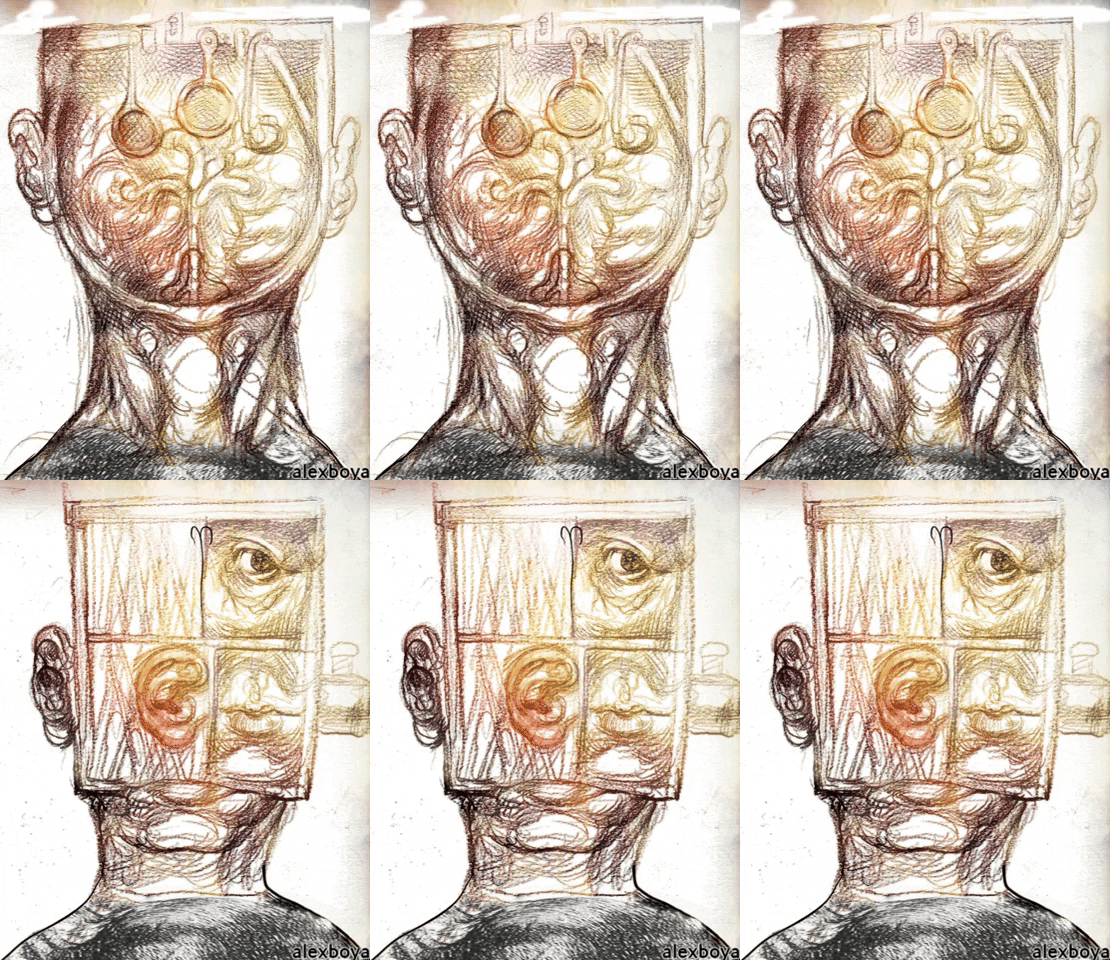
If you’re a writer—or if you’re about to become one, which is a brave thing to admit in public—you’ll eventually find yourself staring down the smorgasbord of genres. Horror, romance, mystery, thriller, science fiction, fantasy, western, literary, and hybrids so strange they sound like something an alien librarian might shelve under “miscellaneous curiosities.” I mean the subgenres alone are nearly limitless. The question is: do you choose one plate of food for life, or do you sneak little tastes from all the dishes? Do you stay with the same tried and ture or go for a feast of creativity?
Good question, right? I mean, should you be in a place currently where you’ve published with a respectable traditional house and had modest to great sales, then the normal inclination from the publisher’s viewpoint is to encourage, or maybe even demand you sip from the same fountain. That you stay with the original genre you started with. That you build upon that. Not an altogether bad idea, but it can be limiting, indeed perhaps at some point even stifling.
I’ve written and published both traditionally and Indie in several genres. Writing across genres is exhilarating and/or terrifying. It’s a bit like riding a roller coaster designed by a committee of mad architects. But for the writer (maybe not his or her frantic publisher and editor), the craft of writing itself doesn’t change as much. The bare bones foundation, character, story, voice, is the same no matter if your protagonist is battling zombies, falling in love, zooming through outer space, or trying to escape the IRS. What changes is the seasoning. The spice you sprinkle over the meat of your story.
That’s what I said before and I’ll say it again, So, before we get too fancy, let’s set “the big truth” firmly in place. Genre is the frosting, not the cake. Without sturdy characters, believable emotions, and stakes that matter, your story will collapse like a badly baked soufflé (which is another bad baking analogy as souffles aren’t in the same category as cakes, but I digress).
A horror novel without characters Readers care about is just a list of jump scares. Evil things which, like a jack-in-the-box jump out at the reader. Ho hum. Now you take a character like Odd Thomas (one of Dean Koontz’s creations) and the Reader is truly captivated by the trials of the fry cook fighting evil.
A romance without genuine emotion is a cardboard cutout play. Or just a whole lot of hot sex with little else. Or maybe a historic setting with stick figures…oh, and sex or maybe just hearts and flowers.
No matter what genre you have in your sights, start with people. Broken, brilliant, flawed, funny, maddening, noble, petty people. The drop them into whatever genre-flavored storm you like, and the reader will follow because they want to see what happens to them. And they feel for them.
Genres
Let’s ponder for a moment a few genres. Or, think about combining one or two or creating a whole new one. But first, we should think about what established genres really are.
Horror --Fear in the Familiar
Horror is less about gore and more about dread. If you’re just writing gore, I’m not sure where you’re going with that. Horror is more, much more, about the moment you realize the thing scratching at the window knows your name. Or maybe you open the fridge and find something in there that has been waiting for you. When writing horror, don’t lean too hard on blood splatter, and spectacle. Try creating atmosphere, tap-dancing with the unsettling detail that makes the ordinary uncanny. And most of all, remember the scariest monster is often human nature itself.
Thriller -- Tension and Pace
Thrillers thrive on the ticking clock. The plot is a ticking clock. Every page should remind the reader that time is running out. But that doesn’t give the writer license to be shallow, to confuse fast pace with unconcern with the characters’ needs. A great thriller pauses just long enough for the reader to see the cost to the hero. That hero’s fear, doubt, love, loss. Then the story surges forward again. Those pauses ratchet up the tension and give insight into the character. Consider, horror is about dread of what might be. Thrillers are about terror of what will be if the protagonist doesn’t act, and in most cases act very swiftly.
Thanks for reading Creator Of Worlds -Writer's Support! Subscribe for free to receive new posts and support my work.
Romance -- In The Grip of Longing
Romance is very little hearts and flowers, and much more at its core about yearning. That desperate desire for connection. And yearning, folks, is universal. Whether the lovers that populate your romance meet in a Paris café or while fleeing an alien invasion, the essential element to good romance is vulnerability. To love is to risk annihilation, emotionally if not physically. Done well, romance isn’t soft. It’s fierce. Pause for a moment and consider all the chaos that can be unleased by deep love, or unrequited love. It’s a smorgasbord.
Science Fiction and Fantasy -- The Strange Spun Into Reality For a Little While
These genres fling us into other worlds using science as a springboard or just the utterly fantastical drawn from a fertile imagination. But their real power lies in showing us our own. Readers delight in the spaceships, black holes, dragons and immortals. but stay for the human truths hidden under the darkness of space and wonder of forever life. If you can make readers believe in the smallest details of your created world, the way the air tastes, the way the culture shapes a child’s dreams then they’ll follow you anywhere, even to galaxies far away or kingdoms that never were.
There are many more genres and subgenres and no doubt more will emerge – and then there is -
The Joy of Blending
Of course, no rule states you must write in only one genre. I don’t. Many of my friends don’t. Often the most engaging stories are hybrids. Think horror-laced romance, SciFi with a mystery at its core, thrillers spiced with fantasy.
Readers love to be surprised, but here’s the truth, they love that surprise as long as the surprise doesn’t feel like betrayal. Blend your genres thoughtfully. Just like the good ‘ol days, don’t bring in the cavalry in a western if there wasn’t any cavalry nearby. Don’t toss in vampires halfway through your spy novel unless you set the tone from the start. Got it?
Old Dog - Horror/Fantasy by Steven Chappelle
Your Voice is the True Genre
In the end, here’s what I’ve discovered after decades of typing my way through several genres: your voice matters more than the label on the bookstore’s shelf. Write with passion. Craft characters who breathe. Make your prose sing with life (or groan with dread, depending on your intent).Accomplish this and readers will follow you across genres.
So, taste the smorgasbord. You may find that, in the end, the feast itself is the point.
Now – go find those characters that will take you there.
*Yes, there is a picture a book my husband wrote. Should you check it out and choose to purchase any one, I will receive a small royalty.
*Don’t forget to come visit me on Social Media and Amazon;
*And if you’re interested in fun gift ideas for writers or just cool stuff for yourself, visit my Story Seeker shop over on Zazzle (yes, I’d get a small commission should you click and purchase) at:
Thanks for reading Creator Of Worlds -Writer’s Support! Subscribe for free to receive new posts and support my work.